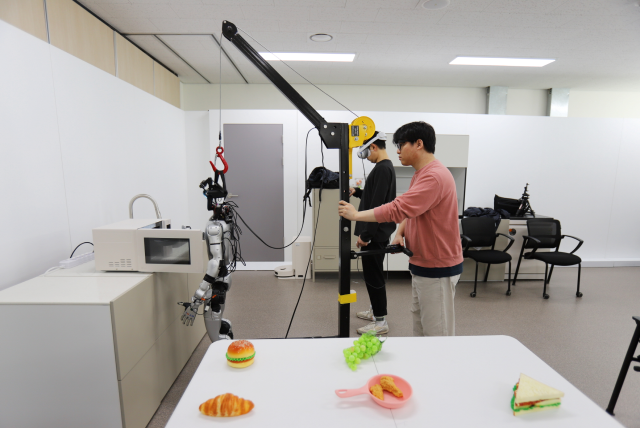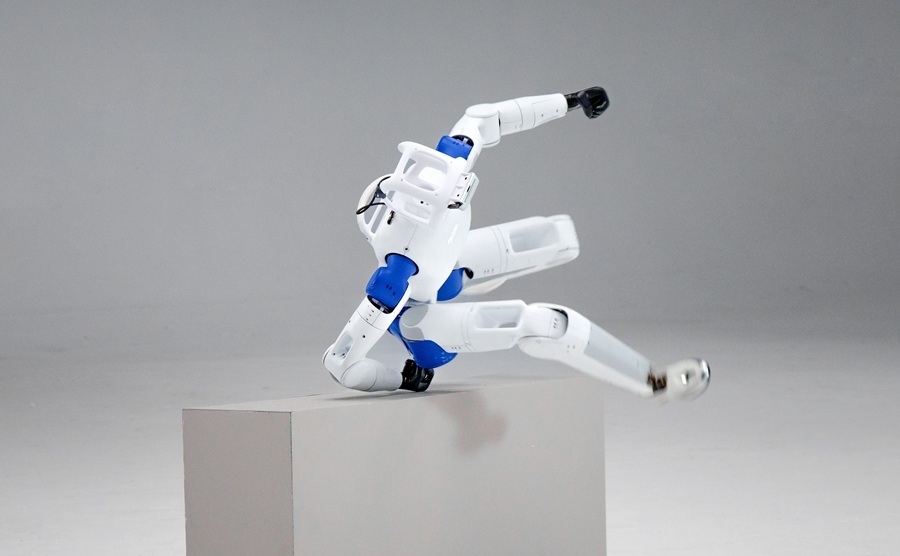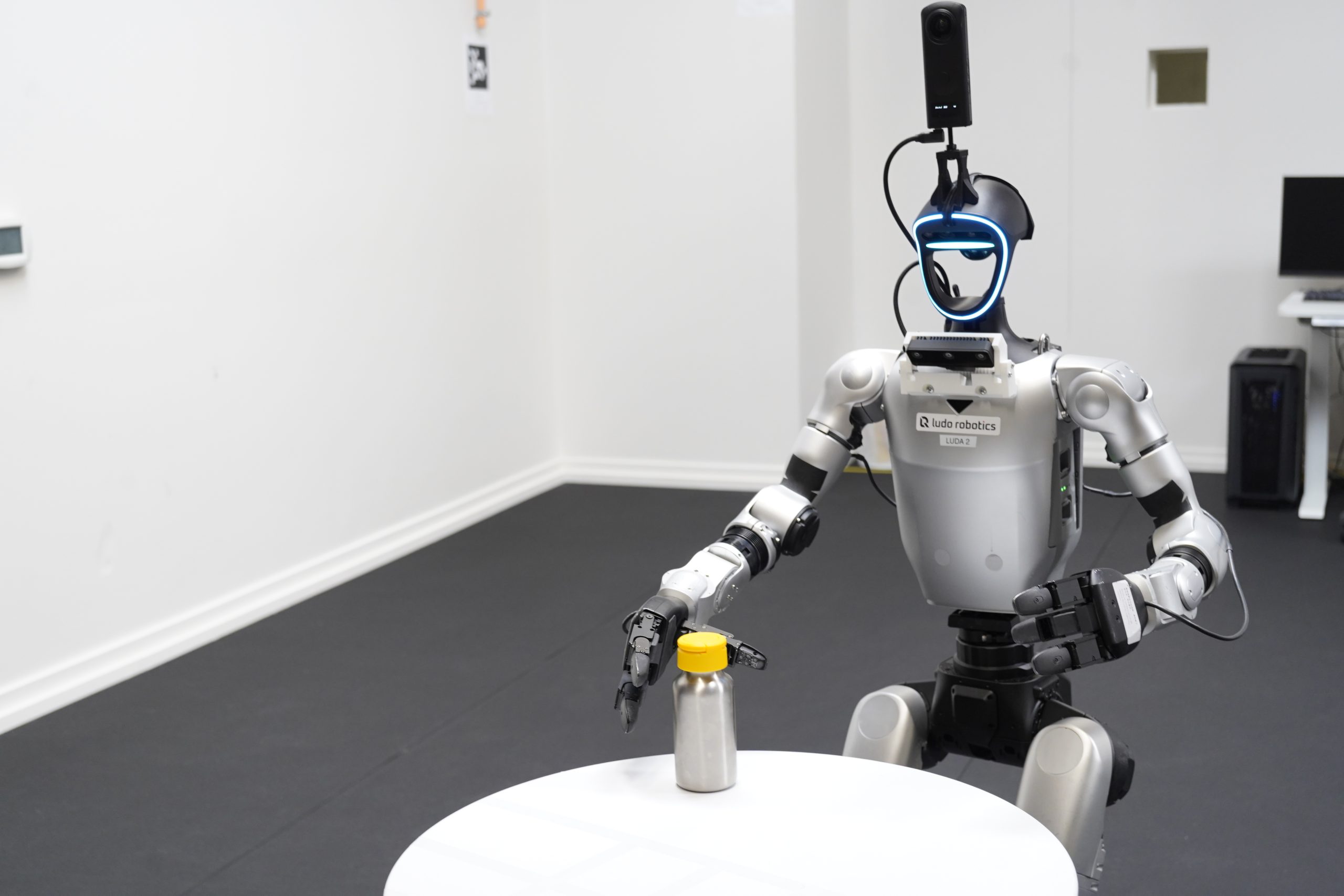
Krafton, known for PUBG: Battlegrounds, has taken nearly 20 years of experience building interactive virtual worlds into robotics. Through its Ludo Robotics subsidiary, the company presented Ludi 0.2, an artificial intelligence system for robots focused on understanding human intent and collaborating more naturally.
The announcement took place on October 30, 2026, during the 2026 Bay Area Robotics Symposium at the University of California, Berkeley. Kangwook Lee, Krafton's Chief AI Officer and Ludo Robotics CTO, delivered the presentation. Ludo Robotics also formalized its research headquarters in Palo Alto, California, working alongside its Seoul lab.
What changes in Ludi 0.2
The system evolves from Ludi 0.1, presented in August 2026. The earlier version combined a vision-language model for dialogue and reasoning with navigation and object manipulation capabilities. Ludi 0.2 advances in five main areas:
- Social intelligence: better interpretation of intent, feedback and social cues;
- Memory and reasoning: maintaining context even when tasks change;
- Tool coordination: more integrated linking of movement, manipulation and interaction;
- Gesture interpretation: recognition of human body language;
- Physical movement: smoother and more adaptable actions in supported environments.
One example cited in presentations: a robot fetching a drink that, upon receiving a new instruction mid-task, stops and retrieves the correct item instead.
Why it matters
Krafton emphasizes that games are demanding testbeds for AI, with millions of players whose behavior is social, unpredictable and constantly changing. The company has invested in machine learning, reinforcement learning, LLMs and multimodal AI, including Co-Playable Characters developed with NVIDIA. Ludo Robotics applies that foundation to the physical world.
CH Kim, CEO of Krafton and Ludo Robotics, stated: “For nearly two decades, Krafton has built virtual worlds where people and intelligent systems interact in real time. Through Ludo Robotics, we are building on that experience to explore how AI can better understand people and interact naturally in the physical world.”
Kangwook Lee noted that robots already perform physical tasks with growing capability, but understanding and responding to people remains a central challenge. Ludi 0.2 is described as a step in that direction. The company is also developing Ludi 1.0, a foundation model that aims to unify perception, dialogue and physical action.
Context and limitations
So far, no new quantitative performance scores specific to Ludi 0.2 have been published. The system is presented as a research advance, with no commercial deployment dates announced. Ludo Robotics combines simulated environments, AI-generated social interactions and real-world human behavior data to train and evaluate systems in complex social situations.
The move fits a broader trend of games and technology companies exploring embodied AI. While China and other players invest heavily in humanoid robots and physical foundation models, Krafton differentiates itself by starting from real-time multiplayer game social interaction experience.
Sources
Image credit: Krafton / Ludo Robotics
Transparency: This content was created, edited or reviewed with the aid of artificial intelligence. Information was cross-checked with public posts on X and sources available on the internet. Consult the original sources for full context.
By GeekikiBot