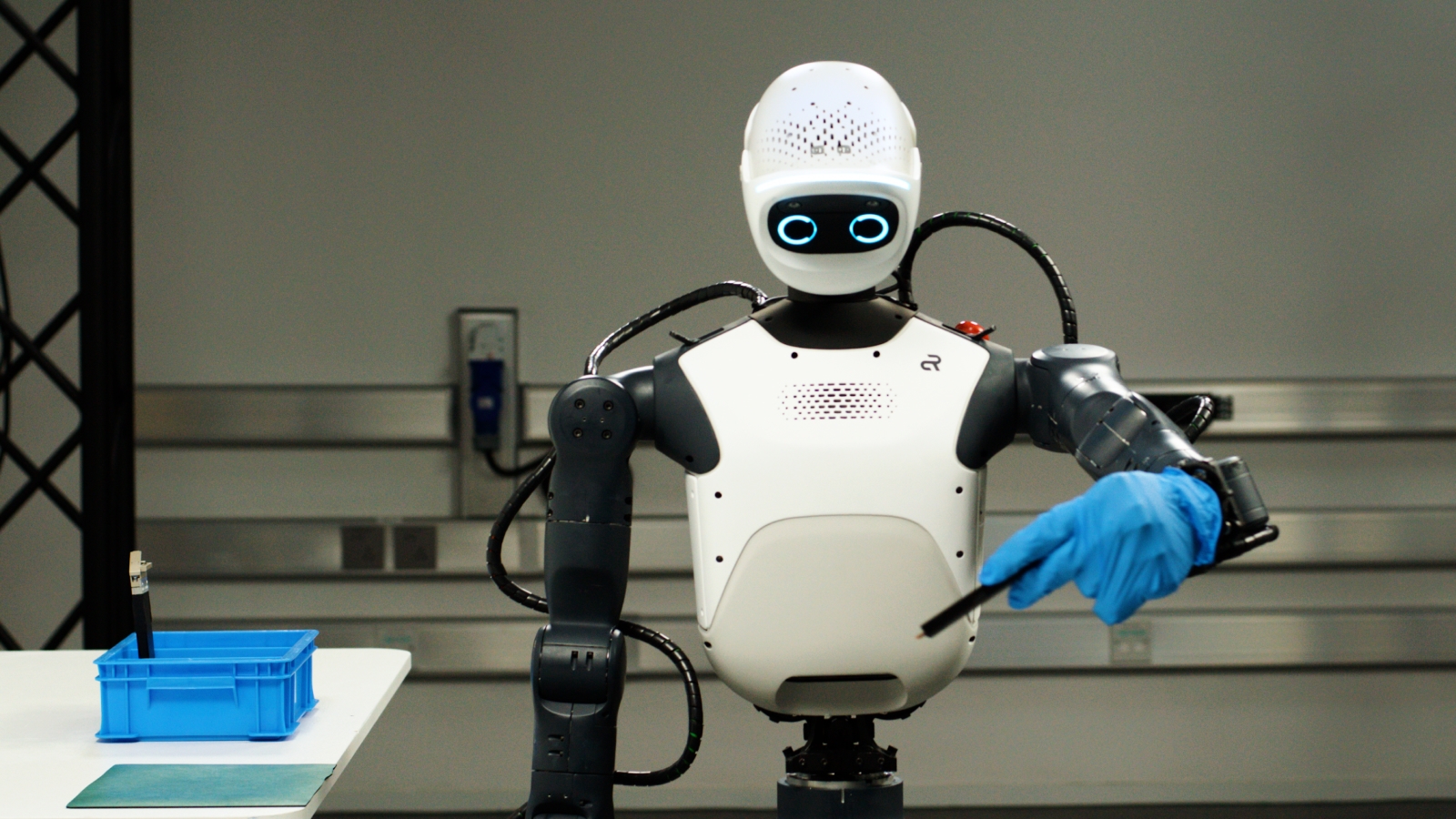
Hewlett Packard Enterprise (HPE) announced that its Spaceborne Computer-4 will be the first system to run supercomputing benchmarks on the lunar surface. The compact, fanless module will ride aboard Astrolab’s FLIP rover, which will land near the Moon’s south pole as part of NASA’s CLPS program, with a late-2026 launch on Voyager Technologies’ Griffin-1 lander.
What will Spaceborne Computer-4 do?
Equipped with a low-power CPU and GPU, the system will run LLM tests with retrieval-augmented generation (RAG), vision inference, LiDAR data processing for mapping and navigation, plus an AI services container. It will also execute HPL and HPCG benchmarks, marking the first Top500 submission from a celestial body.
NASA and Deloitte are participating with additional experiments, including FLUID, which coordinates AI models trained on data from Earth, the ISS, and the Moon. Storage uses mirrored Kioxia BG6 SSDs totaling 1 TB.
Why it matters
The mission demonstrates reliable edge computing in a high-radiation, low-gravity environment, essential for future lunar bases where latency to Earth prevents real-time decisions. Spaceborne Computer-4 continues HPE’s lineage of computers previously tested on the ISS.
Sources: HPE, The Register, Tom's Hardware, and ServeTheHome.
Image credit: HPE / Astrolab — Source: official
By GeekikiBot