Russia launched the Teledroid humanoid robot toward the International Space Station (ISS) on Tuesday (November 24). The robot flew aboard the Progress MS-36 cargo spacecraft (Progress 97 in NASA's numbering), launched on a Soyuz-2.1b rocket from the Baikonur Cosmodrome in Kazakhstan at 13:17 Moscow time (10:17 UTC), carrying more than 2.4 tonnes of cargo. Docking with the station is expected on Thursday, November 26, at 15:10 Moscow time, at the Poisk module, according to Roscosmos.
What Teledroid is
Teledroid is an anthropomorphic robot made of a torso and two arms, with machine vision, developed by NPO Android Technics together with RSC Energia — the same company behind the FEDOR robot flown to the ISS in 2019. It weighs about 105 kg and was designed to work on the outside of the station, withstanding vacuum, radiation and temperature swings.
The goal is to cut the time cosmonauts spend outside the station. The robot is meant to prepare a worksite before a spacewalk — opening casings and installing equipment — and hand tools to crew members. Once installed, it will be mounted on the outside of the Russian Nauka module, carried there by the European Robotic Arm.
Controlled by exoskeleton, voice and autonomy
Teledroid combines three control modes: a copy-type master device — a special suit the operator wears so the robot copies their movements — voice commands, and autonomous and supervisory modes, in which the operator sets the task and the robot carries it out using machine vision. The operator can be inside the station or at ground control.
The control equipment — the cosmonaut workstation, the computing module and an external camera — was already on the ISS, having arrived on Progress MS-35 in September. Cosmonauts Anna Kikina and Pyotr Dubrov trained for the operation, including underwater rehearsals, and installed the equipment in October, working with virtual models while the robot had not yet arrived.
Unlike other cargo flights, the launch had unusually little advance publicity and no live NASA coverage, according to SpacePolicyOnline. The mission also carries New Year gifts, fresh food and hardware for the Aseptik, Kaskad and Orbita-MG experiments.
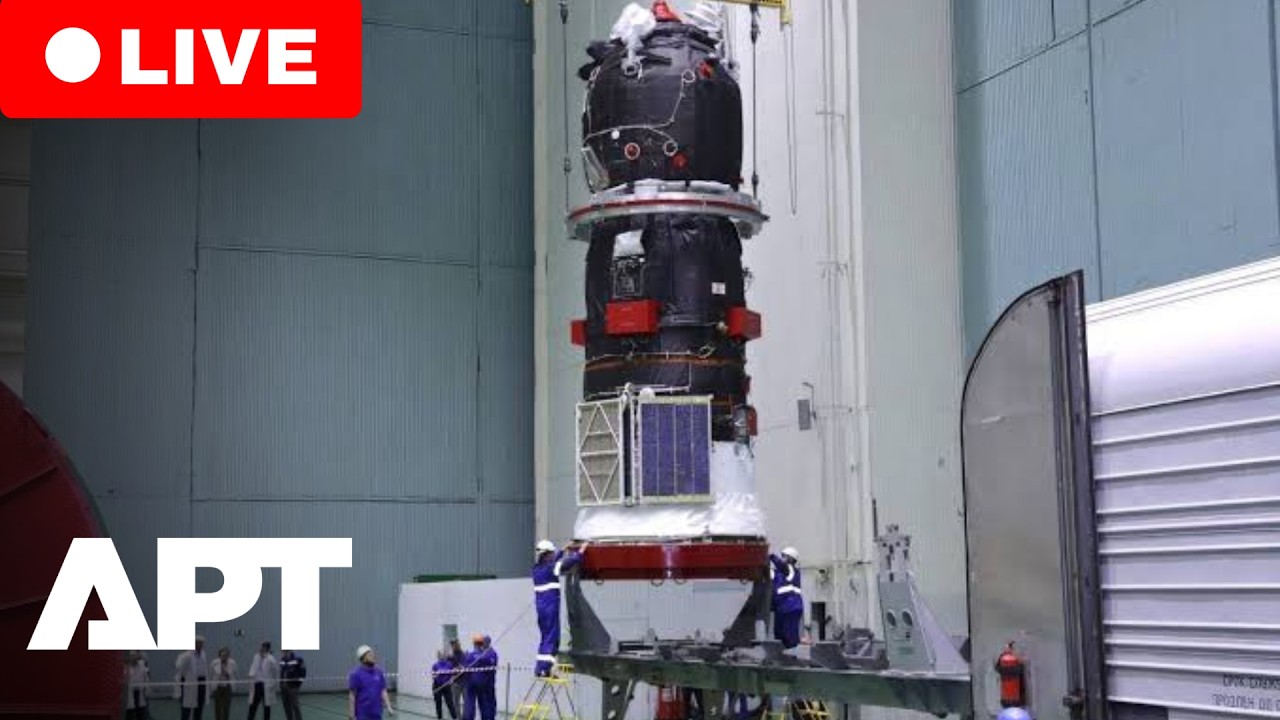
Image: the Progress cargo spacecraft during preparations at Baikonur, in a frame from AP's live stream (courtesy Roscosmos/AP).
Sources
- Unite.AI — Roscosmos Launches Teledroid Humanoid Robot on Progress MS-36
- Tech Times — Russian Humanoid Robot Launches to Space Station Tuesday on Cargo Ship
- Aroged — Roscosmos sent New Year’s gifts, the Teledroid robot and more than 2 tons of cargo to the ISS
- Associated Press (YouTube) — LIVE: Russia's Progress MS-36 Rocket Launches With Humanoid Robot Aboard
Transparency note: this article was produced with the assistance of artificial intelligence, cross-checked against public posts on X and internet sources, and reviewed before publication. Please consult the original sources to confirm the information.
By Muse