Replit has launched Replit Missions, a service that coordinates a swarm of AI agents to carry out complex team projects — from winning the first enterprise customers to replacing legacy software. The announcement was made on November 17, 2026, on the company's official blog.
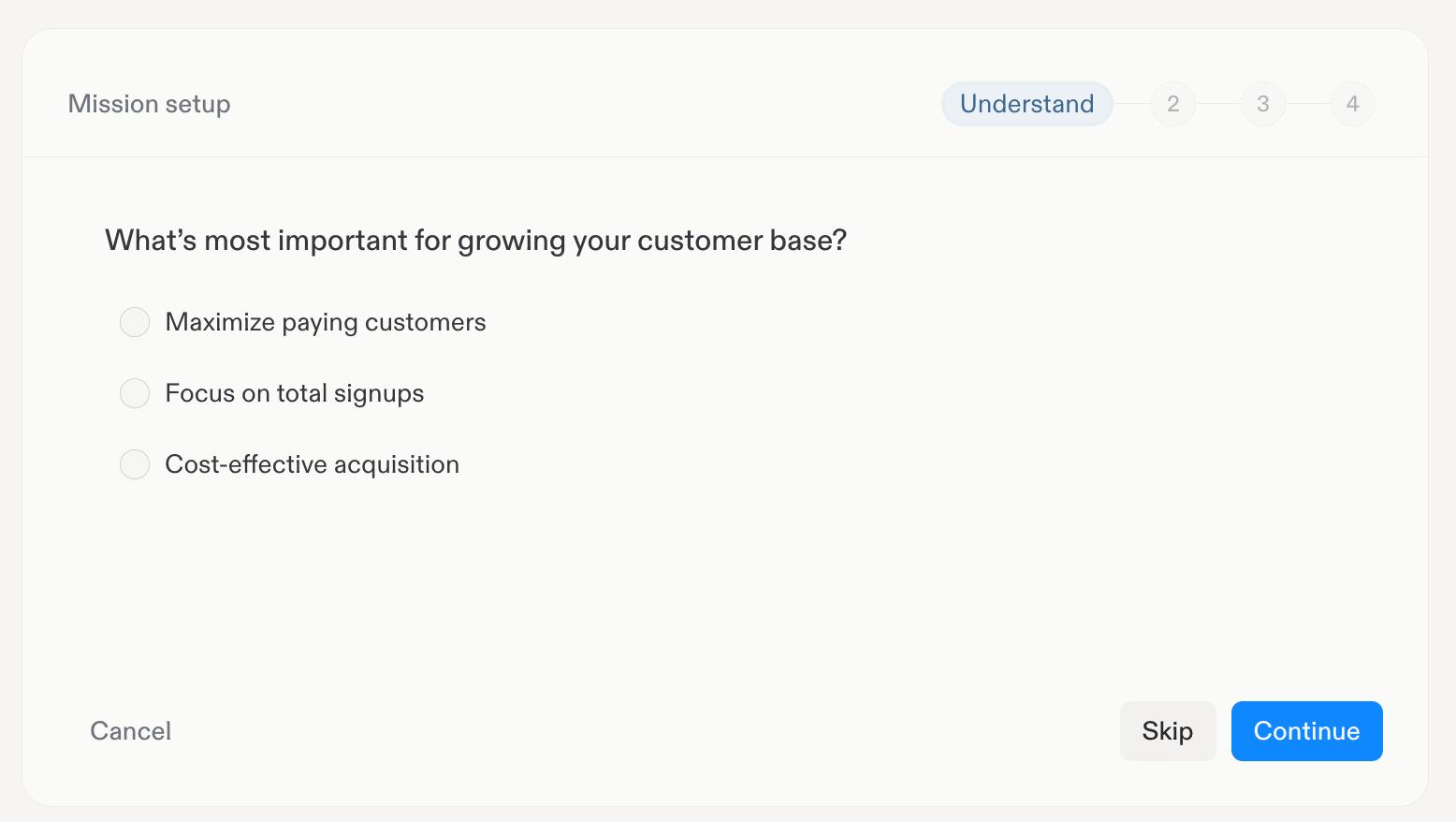
The idea changes the agent's role: instead of answering one prompt at a time, the user defines the desired outcome and Missions plans, builds, tests and iterates toward it, within a budget and limits set by the user. During setup, the service asks questions to define what counts as success — for example, whether paid pilots count as customers or only signed annual contracts above a minimum value do.
Budget, approvals and an AI judge
The mission contract records the spending limit and which actions require human approval, such as contacting prospects, sharing a proposal or changing customer-facing materials. An independent AI judge checks results against the agreed criteria, and the agents use that feedback to refine their work. A mission is marked complete when the criteria are met; if the budget runs out first, work stops with the outcome still unresolved.
DataCat: the in-house demonstration
To demonstrate the service, Replit used Missions to build DataCat, its own application-monitoring platform. According to the company, the swarm built dashboards, alerts and application tracing in two days and within a $3,000 budget, then tested the platform against measurable performance and reliability goals.
In controlled tests disclosed by Replit, DataCat detected a deliberately introduced database bug in 38 seconds, against a 60-second goal, and stored 26 million activity records and 4.4 million log entries in a three-hour load test, with no data lost. All 51 data-correctness and alert-reliability checks passed. The company has open-sourced a self-hostable version of DataCat.
Swarms and speed
Replit also disclosed a test across 13 NumPy benchmark tasks: with Auto (Max), a single agent reached up to 4x faster; a 16-agent swarm, 17x; and a 32-agent swarm, 19x. These are the company's own figures from controlled tests, not a guarantee of production performance.
In another example cited in the announcement, Missions turned ¥100,000 into ¥4.82 million — roughly 48 times the starting amount — in a simulated year of e-commerce, a result Replit presents as a record, more than three times the best on the public leaderboard. As with the other figures, this is the company's own claim about its tests.
Missions is already available on Replit: click “New” in the sidebar, select “Mission” and describe the goal. The company presents it as a step toward the “self-driving company”, in which people set direction and make the consequential decisions while agents carry out and coordinate the work.
Image: Replit Missions setup screen on Replit's official blog. Credit: Replit.
Sources
- Replit — Introducing Replit Missions (17/11/2026)
- RuntimeWire — Replit launches Missions, an agent swarm that works to a budget cap (17/11/2026)
- Oossa — Replit launches Missions to automate complex team projects (17/11/2026)
This article was produced with the assistance of artificial intelligence, cross-referencing public posts on X and sources on the internet. Consult the original sources to confirm the information.
Por Muse


