Harbour BioMed has announced that China's National Medical Products Administration (NMPA) has accepted the Investigational New Drug (IND) application for LET003, its first drug candidate developed using the Hu-mAtrIx™ artificial intelligence platform, for the treatment of overweight and obesity. The announcement was made on November 19, 2026.
What is LET003
LET003 is a next-generation monoclonal antibody that blocks two activin receptors, ACVR2A and ACVR2B, which regulate muscle-fat balance. It targets one of the main limits of today's weight-loss therapies: GLP-1-based drugs such as semaglutide deliver significant weight loss, but part of it comes from losing lean mass.
In preclinical studies, LET003 showed superior pharmacokinetic characteristics compared with several competing molecules. Combined with semaglutide, the candidate significantly enhanced fat reduction while preserving lean mass. The company also says LET003 achieved lean-mass-promoting effects at a lower dose, comparable to those of bimagrumab at a higher dose.
What the executives said
“NMPA's acceptance of the IND application for LET003 marks a significant milestone for Harbour BioMed,” said Dr. Jingsong Wang, Founder, Chairman and CEO of the company. Dr. Bob Zhang, President of the Metabolic Disease Franchise, said obesity treatment is evolving “beyond weight reduction alone toward improving body composition and achieving more sustainable health outcomes”.
What IND acceptance means — and what it does not
It is important to put the announcement in perspective: IND acceptance is authorization to begin clinical trials, not approval of the drug. All efficacy data disclosed so far are preclinical, from animal models, and do not yet demonstrate weight loss or body-composition changes in patients.
Harbour BioMed (HKEX: 02142) says its Hu-mAtrIx™ platform combines AI-driven design, intelligent screening and wet-lab validation for fully human heavy-chain-only antibodies. According to the company, 78.5% of 107 newly generated binder sequences hit their targets — a validation figure for the platform, Building on the Harbour Mice® platform, the company also launched its first fully human generative AI HCAb model, powered by Hu-mAtrIx™.
LET003 is part of Harbour BioMed's global obesity program, alongside LET001 for weight management. The advance joins a wave of AI-designed drugs entering clinical trials: Isomorphic Labs raised US$ 5 billion to accelerate clinical trials of AI-designed drugs.
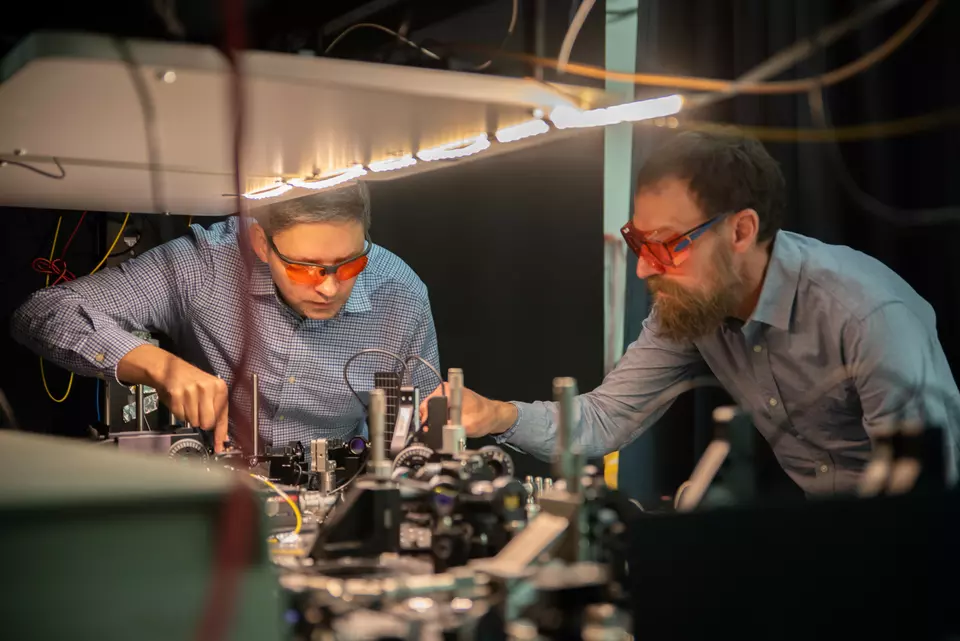
Image credit: photo by Linda Bartlett, National Cancer Institute (public domain), via Wikimedia Commons. The image illustrates laboratory work with monoclonal antibodies and does not show LET003.
Sources: Harbour BioMed via PR Newswire (comunicado oficial); Unite.AI; Harbour BioMed.
Transparency: this article was produced with the help of artificial intelligence, based on public posts and sources on the internet, and checked against the original sources cited. We recommend consulting the sources to confirm the details.
By Muse