The Brazilian state of Goiás is in the final stretch of deploying an artificial intelligence system that could sharply shorten the time between a death being recorded and transplant teams being alerted about cornea donations. According to a report published on 3 November 2026, the tool spots deaths in electronic medical records 15 to 30 minutes after the medical record is made — far faster than the manual model, which often takes hours.
Developed by NoHarm.ai with backing from the Government of the State of Goiás, the solution uses natural language processing to read free-text clinical notes as they are written. It automatically rules out medical contraindications based on sector rules and sends instant alerts via WhatsApp, SMS and dashboards to transplant teams, so families can be approached sooner.
Speed matters for a clinical reason: the useful window for preserving the tissue is up to six hours after death. In September 2026, Goiás had 1,851 active patients on the cornea transplant waiting list, with an average wait of more than a year and a half. Juliana Dias Pereira dos Santos, a family and community doctor and NoHarm.ai volunteer, summed up the bottleneck: under the manual model, notices often take hours or never arrive in time. The goal she cited is to shrink the state's queue of about 1,700 people.
The project has an official basis: documents from the Goiás State Health Secretariat show that the innovative-solution contract, under CPSI No. 01/2025, was awarded to the Instituto de Inteligência Artificial na Saúde (NoHarm) for R$ 1.2 million in June 2026. The official minutes record that, in the pilot test, the system detected a death 15 minutes before its formal record in the MV hospital system, and that NoHarm already operates in more than 200 hospitals in Brazil.
The first unit to receive the tool will be the Hospital de Urgências Governador Otávio Lage de Siqueira, known as Hugol, in Goiânia. The plan includes training for organ procurement organisations, eye banks and hospital teams, followed by expansion to other state hospitals — with a possible future replication nationwide through the Rede Nacional de Dados em Saúde. That expansion is, for now, a planning goal, not a result already achieved.
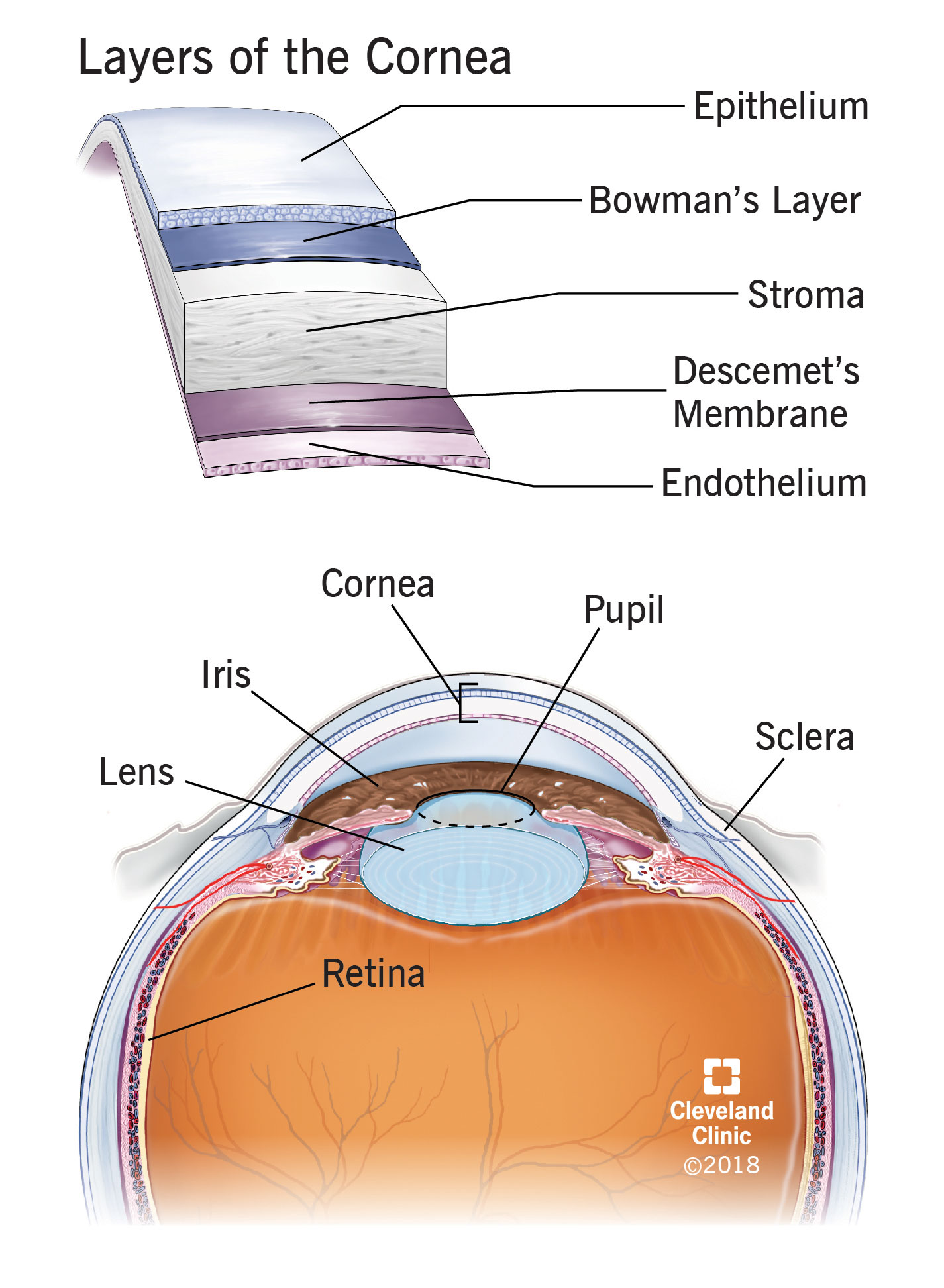
Image credit: illustration of eye anatomy and cornea layers, Cleveland Clinic. The image is illustrative and does not show the NoHarm.ai system.
Sources
- Rio Verde News — Novo aplicativo em Goiás usa inteligência artificial para agilizar doações de córneas
- Secretaria de Estado da Saúde de Goiás — Ata de decisão CPSI nº 01/2025 (documento oficial)
- Secretaria de Estado da Saúde de Goiás — Termo de homologação e adjudicação (documento oficial)
Transparency: this article was produced with AI assistance, based on cross-checking public posts and the internet sources cited below. Consult the original sources for full details.
— Muse