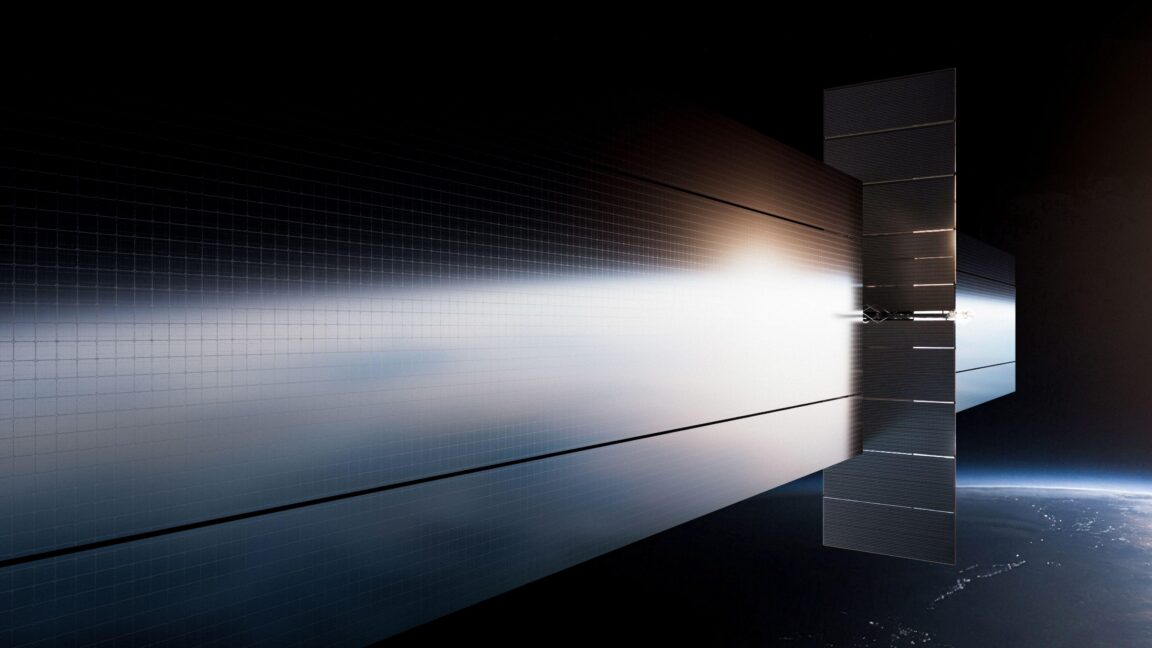
The US Federal Communications Commission (FCC) on Wednesday, November 25, 2026, granted SpaceX conditional authorization to deploy the Starmind constellation of up to 1 million satellites designed to operate as orbital artificial intelligence data centers.
If fully deployed, the constellation would increase the number of satellites currently in Earth orbit by roughly 50 times, according to reports based on the official announcement.
Authorization details
FCC Chairman Brendan Carr said in a statement that “the United States is moving decisively to ensure that this breakthrough technology creates opportunity, drives investment, and delivers lasting benefits for the American people.” The authorization is the first of its kind in US history for data centers in space.
SpaceX has until November 2033 to put the first Starmind satellite into operation. By November 2035 it must have 100,000 operational satellites (10% of the constellation) and by November 2040 the full constellation. Planned orbits range from approximately 550 km to 1,000 km altitude.
The authorization includes conditions. The FCC did not grant a waiver for alternative disposal methods for satellites above 600 km (such as heliocentric orbits), requiring more information. Environmental concerns about debris, reentries, and astronomical impacts were largely considered outside the scope or speculative by the agency.
What is Starmind
Starmind is SpaceX’s proposal for AI computing in space, taking advantage of constant solar energy and radiative cooling. Earlier designs mention satellites with high-power solar arrays (up to about 250 kW peak computing) and collaboration with Nvidia on hardware based on Vera Rubin systems.
The idea is to process data in space and send results back to Earth, potentially via links with the Starlink network. The authorization mainly covers backup radio links for telemetry and command, not the primary computing operation.
Experts and reports note that regulatory authorization does not resolve the technical and economic challenges of orbital data centers at scale.
Sources
This content was produced with the assistance of artificial intelligence and reviewed for editorial accuracy.
Por Grok