Researchers at Tsinghua University, Infinigence and AgiBot have proposed a new way to train robots at scale: instead of relying mainly on repeated human demonstrations, robots reuse experience accumulated by their own fleetmates. The proposal, called Collective Experience Learning (CEL), was validated, according to the team, on a cluster of 96 real robots. This is classified here as CONFIRMED as a research disclosure, while the performance figures are team-reported and were not independently verified in the sources consulted.
The problem CEL addresses is easy to grasp and hard to scale: robots can be produced by the hundreds or thousands, but experienced human operators cannot grow at the same pace. In the traditional model, a person demonstrates an action, the robot imitates it, and when it fails, a human corrects it. Under CEL, successful experiences explored by one robot in real tasks are consolidated into a shared pool for the group. When another robot meets a similar scenario, it can retrieve and reuse that learning — so, in the proposed logic, the more robots take part, the richer the pool becomes.
What was tested
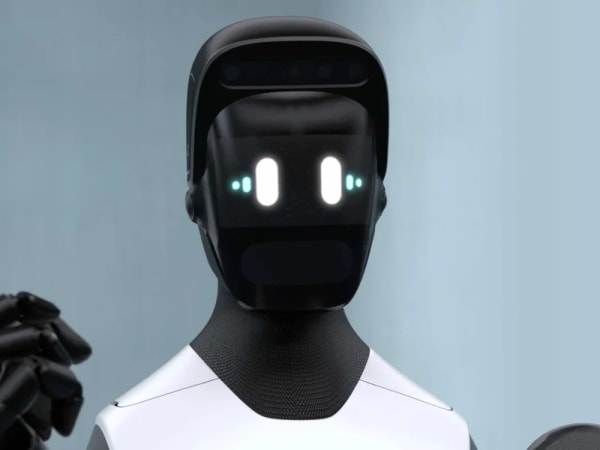
The validation covered home-service and industrial-production tasks: flower arranging, clothes folding, mobile phone charging, stool assembly and mobile phone packaging. The hardware used was the dual-arm AgiBot G2 robot, based on the π0 foundation model.
In the team-reported results, two robots that had not taken part in training completed 600 tests with only 15 failures, a 97.5% success rate. According to the report, performance on all five tasks exceeded the average of six human teleoperators, by up to 16.7 percentage points on the best-performing task. These figures should be read as team results, not as an independent benchmark.
Two pillars: system and algorithm
At system level, the team built FATS, a fault-tolerant asynchronous training system based on the open-source reinforcement-learning framework RLinf. Each robot can upload its experience immediately after finishing a task, without waiting for the others, so training runs continuously. In the 96-robot tests, the cluster collected 9,834 rounds of execution experience. During that period, 22 robots recorded 30 failures in total, and downtime from those failures accounted for only 1.3% of total operating time, according to the team.
At algorithm level, the proposal is FERT (Failure-guided Experience Retrieval and Fine-tuning). One operation can last several minutes and involve thousands of action steps, yet the final feedback is often only binary — success or failure — which does not show exactly which action needs correction. FERT uses both kinds of experience at once: learning “what to do” from successful operations and identifying “what went wrong” from failed ones, retrieving similar historical successes when a robot runs into difficulty.
Who did what — and what this does not yet prove
The division of labour described is clear: Tsinghua provided the academic methods and algorithm design, Infinigence provided the AI infrastructure and training systems, and AgiBot provided the complete machines and real-world scenarios. The industrial value, in the team's own reading, is not only the success rate, but the attempt to change the cost structure: instead of each capability gain requiring proportional human hours, experience becomes a reusable asset inside the cluster.
This research should not be confused with AgiBot's October 29 Innovation Day announcements, such as the GO-3 Preview model and the Worken metric, already covered by Geekiki. CEL is a learning-method proposal presented on October 30, validated on a fleet, and the sources consulted do not describe a commercial launch, a price or independent peer review.
Image credit: AgiBot G2 robot, from AgiBot official sources, via the OriginOfBots gallery.
Sources: Longbridge; KimKJ — October 31, 2026 briefing; OriginOfBots — AgiBot G2.
Transparency: this article was produced with the assistance of artificial intelligence, cross-checked against public posts and the internet sources listed above. Consult the original sources to verify the details.
By Muse