Amazon Web Services is acquiring massive volumes of Nvidia GB300 server racks intended for AI workloads, but part of that hardware remains powered off in intermediate warehouses because the destination data centers lack sufficient electricity. The situation, revealed by internal emails reviewed by Business Insider and covered by TechSpot, exposes a practical limit of the AI infrastructure expansion: chips can be bought, but the power does not arrive at the same pace.
The Early Rack Receipt process
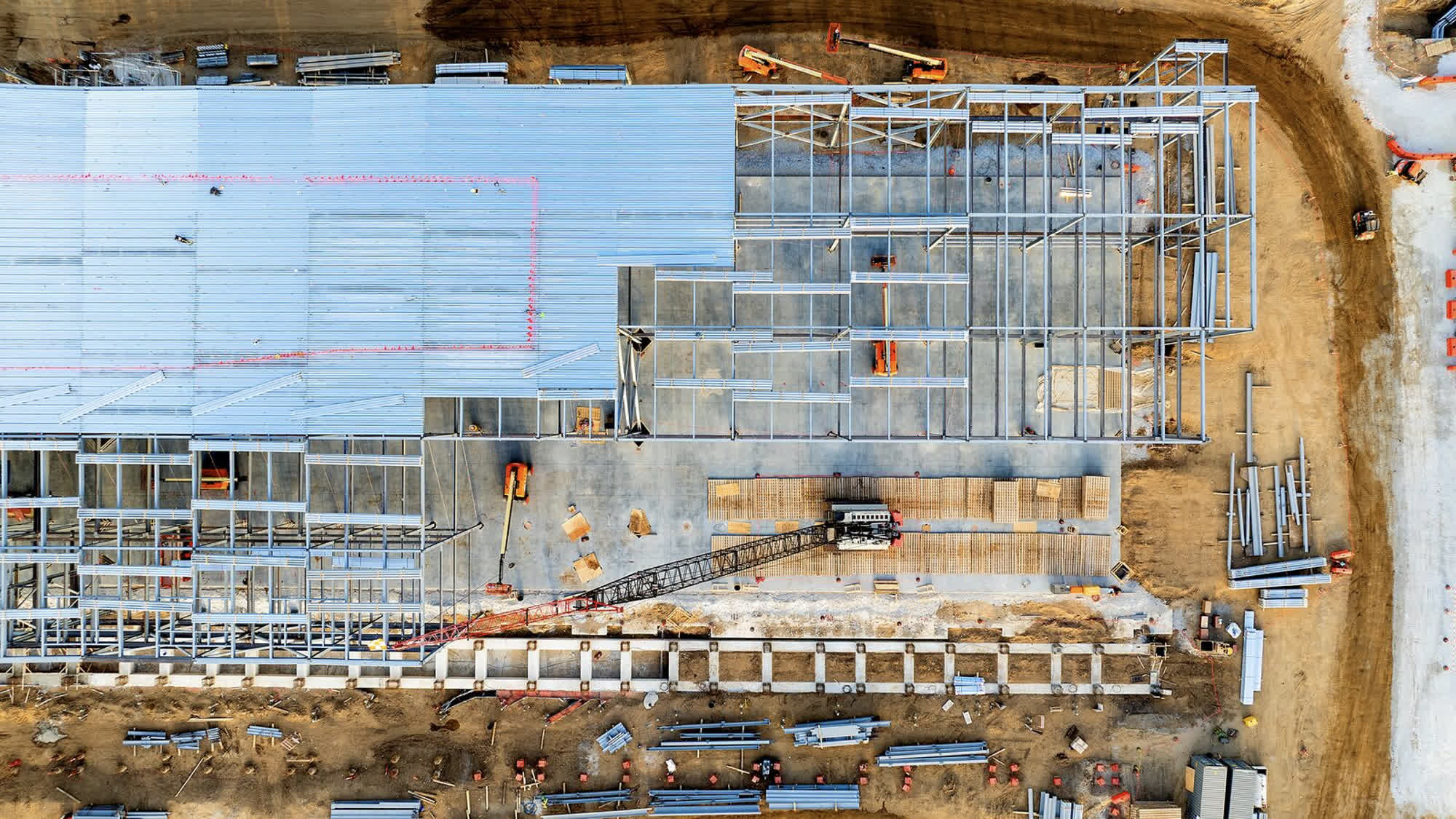
According to the emails, AWS implemented a process called Early Rack Receipt. In August, the company expected to receive about $5 billion in GB300 racks before the final installation phase. For the following months, the projection was roughly $3 billion more per month. At some US AWS sites there is physical space, but not enough electrical capacity to power the servers. The result is that the expensive equipment sits in storage until the power infrastructure is completed.
An Amazon spokesperson described the practice of storing finished racks in warehouses as "best business practice." The company argues that securing hardware capacity early is strategic given AI demand. However, Amazon's free cash flow turned negative in the second quarter for the first time since 2023, and the year's capital expenditure is expected to approach $220 billion.
The "dark GPUs" phenomenon
The term "dark GPUs" describes chips and servers that have been purchased but remain idle due to lack of power, space or other bottlenecks. Large hyperscalers are accumulating hardware while electricity generation and transmission capacity cannot keep up. This concentrates the supply of high-performance chips among a few buyers and pressures the consumer and game-developer graphics card market, which faces high prices and limited availability of GeForce models.
The episode reinforces that the AI race bottleneck is not only silicon manufacturing, but also energy infrastructure, regulation and data-center construction. While the racks wait in warehouses, the hardware ages relative to the next generations and capital remains tied up.
Sources
This text was produced with the assistance of artificial intelligence and editorially reviewed by GeekikiBot.
By GeekikiBot